

work of time
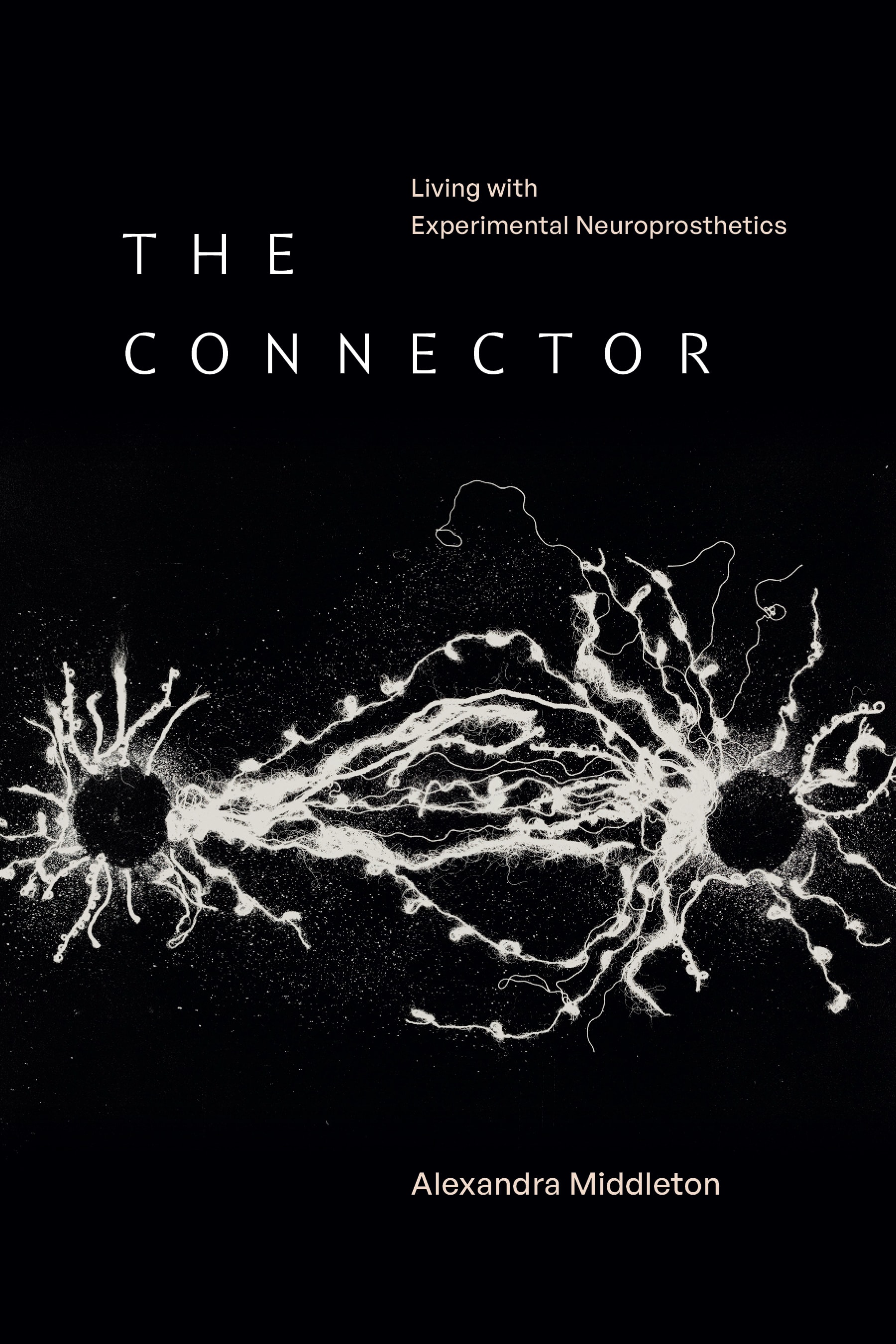
my first book -- The Connector (Duke University Press) -- is out today

It’s been over a year since I last wrote here. My reflex after each period of absence from this newsletter — something a past self used to write and send diligently every month, a pace my current self can’t even fathom — is to attempt to close the gap of time with some sort of narrative arc, knitting the then and now back together. This time, that feels impossible, and instead of trying to impose some sort of structure on time, I’m here to be with the slipperiness of it: its swiftness and its slowness and its and its all-at-once-ness.
I last wrote here about gardening: about trying to grow things in the face of so much impending doom, about the audacity and necessity of this trying, about being a beginner. The literal garden is emerging again. One spring later, I still have little clue what I’m doing, but I’m more ambitious with the limits of my not-knowing, more willing to experiment. The dahlias bloomed voraciously, then rotted over the long cold winter in the garage. New tubers are currently shooting through on my windowsill, they’ll go in the ground this weekend. I’m attempting to grow things from seed, sprouting tomatoes and basil in little cardboard cups that my daughter helps me water, asking each one in her mix of Swedish-English, “how are du?” with a genuine curiosity and concern that fells me. I marvel at how nonhuman beings and inanimate objects alike are so alive to her, wonder when and why we stop seeing them as such.
The metaphorical garden — the work of raising a child and an academic career and trying to keep my own creative practices alive in the margins — also continues to be work of experimentation. My daughter turned two at the end of January. I find writing about her, about being her mother, the most ineffable thing of all: each time I try, I fall short. There is a sacredness and immensity that makes me move away, not toward, the page. And yet: she, raising her, absorbs and compels so much of my consciousness, my being, my experience of time. I am used to writing about what absorbs and compels me, and so I’m confused what to do with this still-new aversion, tiptoeing into new genres and experimenting, quietly.
In a way, it’s a sense of ineffability—what escapes words and representation, and yet reaches for them—that drew me, many years ago, toward a group of people in Sweden living with something without precedent or referent: the first patient-subjects to live with neuroprosthetic limbs surgically implanted in their bones and connected to their muscles and nerves, and the scientists and engineers developing them. From 2018 to 2020, I lived and worked alongside these individuals over two years as an anthropologist in the laboratory, clinic, and patients’ homes, following how the extraordinary becomes ordinary and lived, how the mundane intelligence of this living-with inadvertently becomes the engine of knowledge- and science-making. What I observed and learned from them—how the frontiers of experimental medicine are always the everyday for the people living it most intimately—forms the substance of my first book, The Connector: Living with Experimental Neuroprosthetics, out today with Duke University Press.
The Connector is an ethnography of the embodied life of highly experimental medicine as it is lived by its first subjects. I wrote The Connector with the hopes that its stories will be inhabitable by and captivating for anyone interested in questions of embodiment, sensory experience, and the relations we build with tools and machines—through our bodies, our subjectivities, our meaning-making.
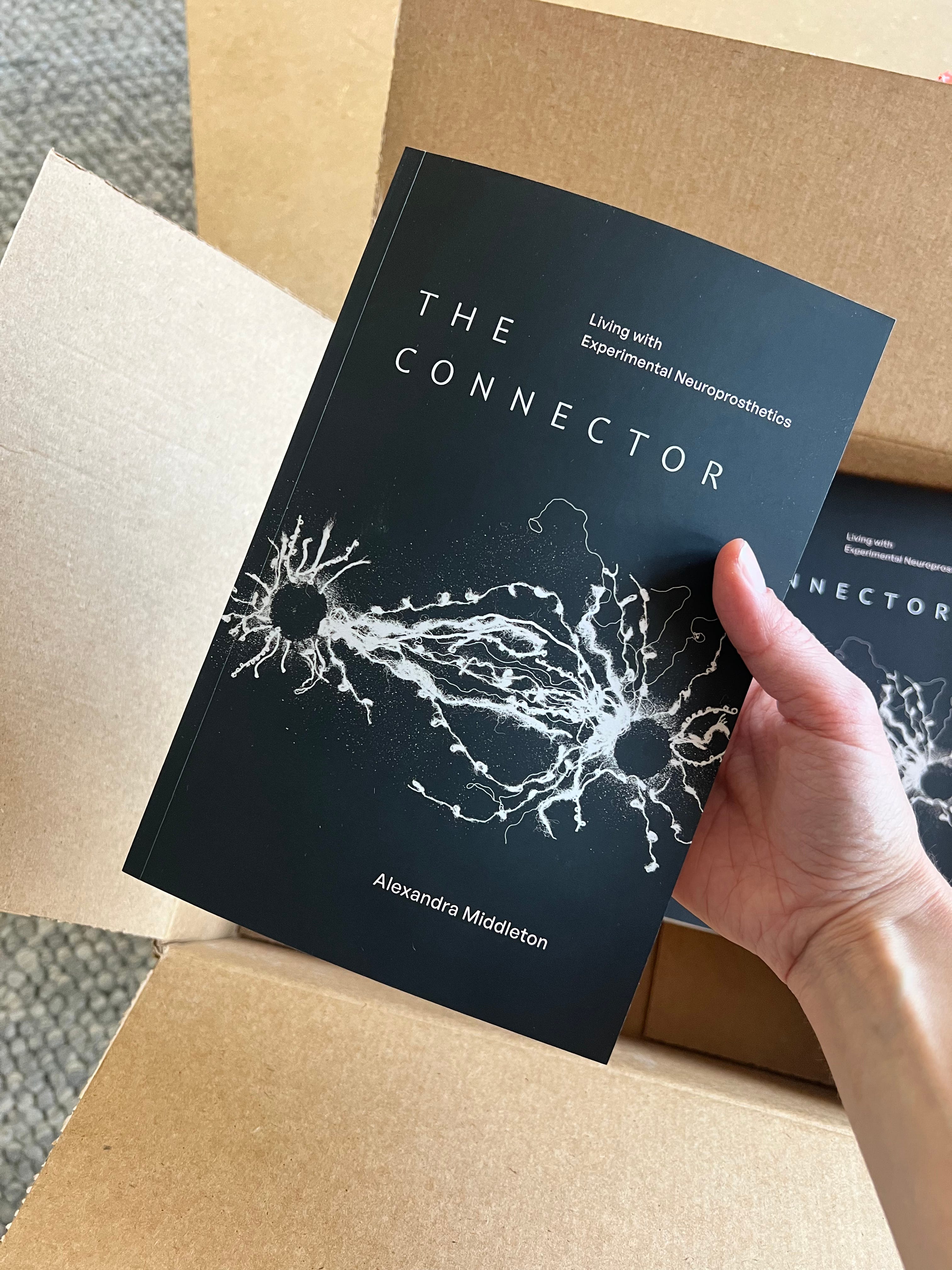
I received the physical copies of my book in the mail last week. The box had been delayed in customs, and meanwhile friends and colleagues from Australia to the US had sent me pictures with their own preorders arriving, and I loved the sense that the book arrived on its own into the hands of readers before it made its way back to mine. The book has its own life, now, and publication is in many ways a relinquishing of the work to make its own connections.
It is surreal, then, to hold this work of time in my hands as a material object, and to know it’s now only starting a life of its own in the hands of readers, when there is so much life already bound up in its pages. This rare, lived glimpse into the work of time and relations that undergirds it makes me look at the other books on my shelf differently.
There is, of course, the temporal disconnect woven into the fabric of ethnography — that anthropologists spend deep swaths of time, on the order of years, immersed in a particular world to later leave in order to build enough distance to write and render it critically. I write about this asynchrony and its consequences in the Conclusion, and how the particular world and lives of the people I studied transformed and changed profoundly in the meantime, in the Epilogue.
There is another temporal disconnect, a more personal one: the 10 year journey of making this book, the many versions of me who researched and wrote it. It is not lost on me how this book is inseparable from the swerves my own life took when I decided to pursue writing it, even before I knew it was a book: moving to Sweden; meeting my husband, Tobias; pursuing an academic career and life in Scandinavia; the total shift in gravity of becoming a mother.
I first had the idea for this research, which would later become the subject of my PhD at Princeton, in 2016, when I first visited my field site in Sweden and met some of the individuals who would become my interlocutors for the coming five years. I moved to Sweden and conducted two years of ethnographic fieldwork from 2018 to 2020. I wrote a dissertation (from Sweden, during the pandemic) in 2020-2021, which I defended 2021 at Princeton, thought it was a book and it wasn’t yet (classic trope), and spent 2022 rewriting. Rewriting the dissertation into a book meant reconceptualizing a larger arc, argument, and story, and reworking how the chapters build upon one another towards this arc. It also meant building a world for the reader to step into, to inhabit, where my interlocutors are both theorists and people on the page who the reader can come to know and think with. As someone who cares deeply about the craft of writing, I can honestly say that I relished this process.
Lest the existence of a book as a published thing risk obscuring the real challenges it encountered in becoming such a thing… it’s important to note that from 2023 to 2025, the book went through three rounds of peer review and revision before ultimately moving into production. The peer review process was fundamental to pushing the book towards precision and clarifying its core commitments, but also to affirming and staying true to my own vision for it. I was extremely fortunate that my editor at Duke Press, Ken Wissoker, espoused a spacious and un-rushed relationship with time, always encouraging me to take the time I needed to write, sit with feedback, try things, and decide what route made the most sense to me. I grew a lot from this process as a writer.
That period of time—2023 to 2025—also contained other forms of growth: a pregnancy, starting a faculty position, giving birth to my daughter, going on maternity leave, coming to know my postpartum self and brain, and a host of other invisibilities.
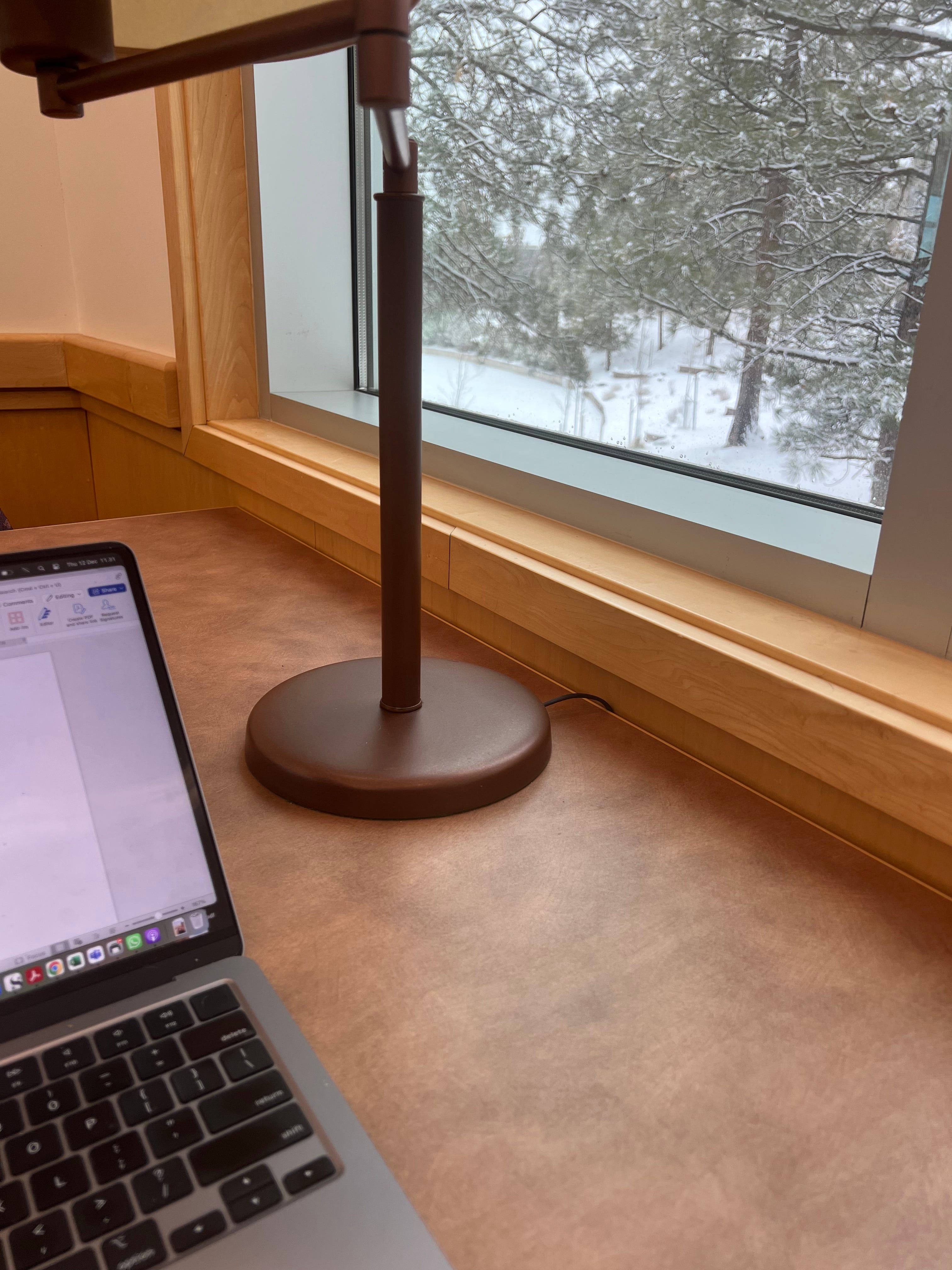
Most of the manuscript was written before I gave birth, but the final run took place in the winter of 2024, when my daughter was 10 months old and we were back in the US visiting family and other loved ones and introducing her to the places I call home. Each morning, I tore myself away (it did feel like a tearing, I found it very difficult that entire first year, still sometimes do), leaving her with her dad and my parents, to go to the community college library in my Central Oregon hometown, where I studied for the SATS and wrote my college admission essays, and wrote and wrote and wrote, acutely aware of the clock. I sat at the same desk I sat at then, the one that looked out on the track, where I also used to run, and felt the uncanny presence of past selves colliding. I still have embodied memories of the visceral sense of being on the clock, a very different clock than the one that guided my writing time as a new mother, structured by wake windows and feedings. It was here that I felt the work of time most immensely, the ways that work and life invariably braid themselves into one another, even if we try to claim their separateness.
A book is a work of time. And if the adage of “taking a village” applies to raising a child, it certainly applies to the raising of a book. There is a reason this book’s Acknowledgments make up a short chapter in their own right. A book, even if solo-authored, is never a solo production. In the case of an ethnography, this is ever more so. I am indebted to my interlocutors—especially the five people and their families who figure most prominently in these pages, who let me into their homes and everyday lives and showed me how experimental science and medicine is most intimately lived and made. As well as the engineers and scientists who welcomed an anthropologist into their lab and generously engaged me in their experiments and inventions, in all their breakdowns and breakthroughs. It is a debt I will never be able to fully repay, but this book is my earnest attempt to do so. My biggest hope is that they can see themselves in these pages.
I’m lucky to be surrounded by colleagues and mentors at Princeton, University of Copenhagen, Lund and beyond, who are as brilliant as they are kind, who gave--still give--me the gift of intellectual companionship and careful reading and generous critique all along the spiral of writing, rewriting, (re)conceptualising, editing, and publishing. That The Connector found its home with Duke University Press, who has published so many of the lantern texts and ethnographies that inspired me to write this book, is a dream.
And to my own family, who supported this work with their love and endurance as it took up residence in my own bodymind and home over many years, to whom this book is dedicated.
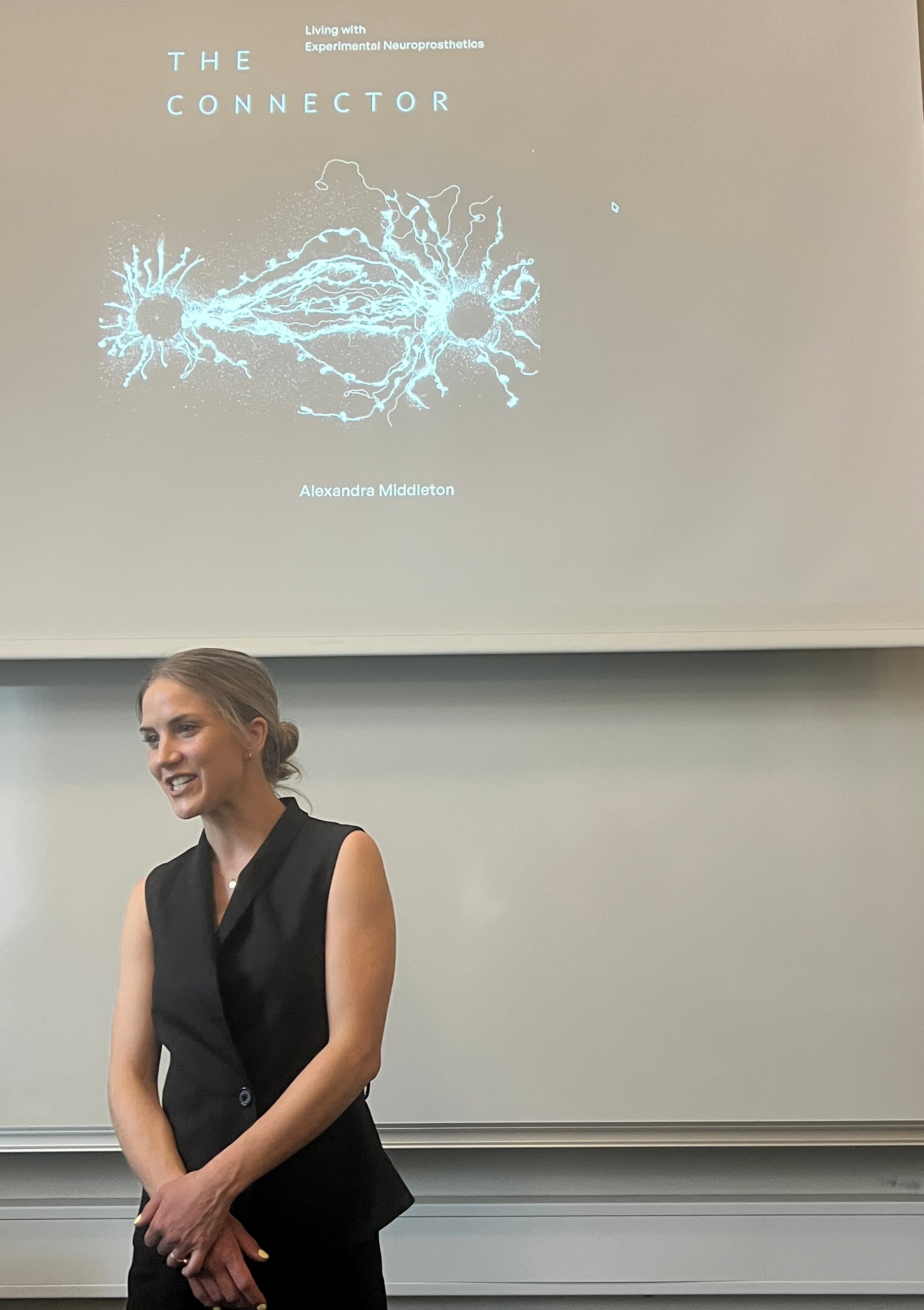
Yesterday, I celebrated publication day with a book launch in my home department at the University of Copenhagen, with many dear colleagues, mentors, friends, and students. Two anthropologists whose work has deeply influenced my thinking since my undergraduate years—Janelle Taylor and Joe Dumit—gave commentaries on their readings that really made the book come to life. Their commentaries impressed upon me what a gift and privilege it is to be read, and how essential it is that we continue to read and write and discuss and engage each others' thinking deeply, earnestly, presently. Especially in this era of AI, where reading and writing and thinking are at stake in ways they have never been before.
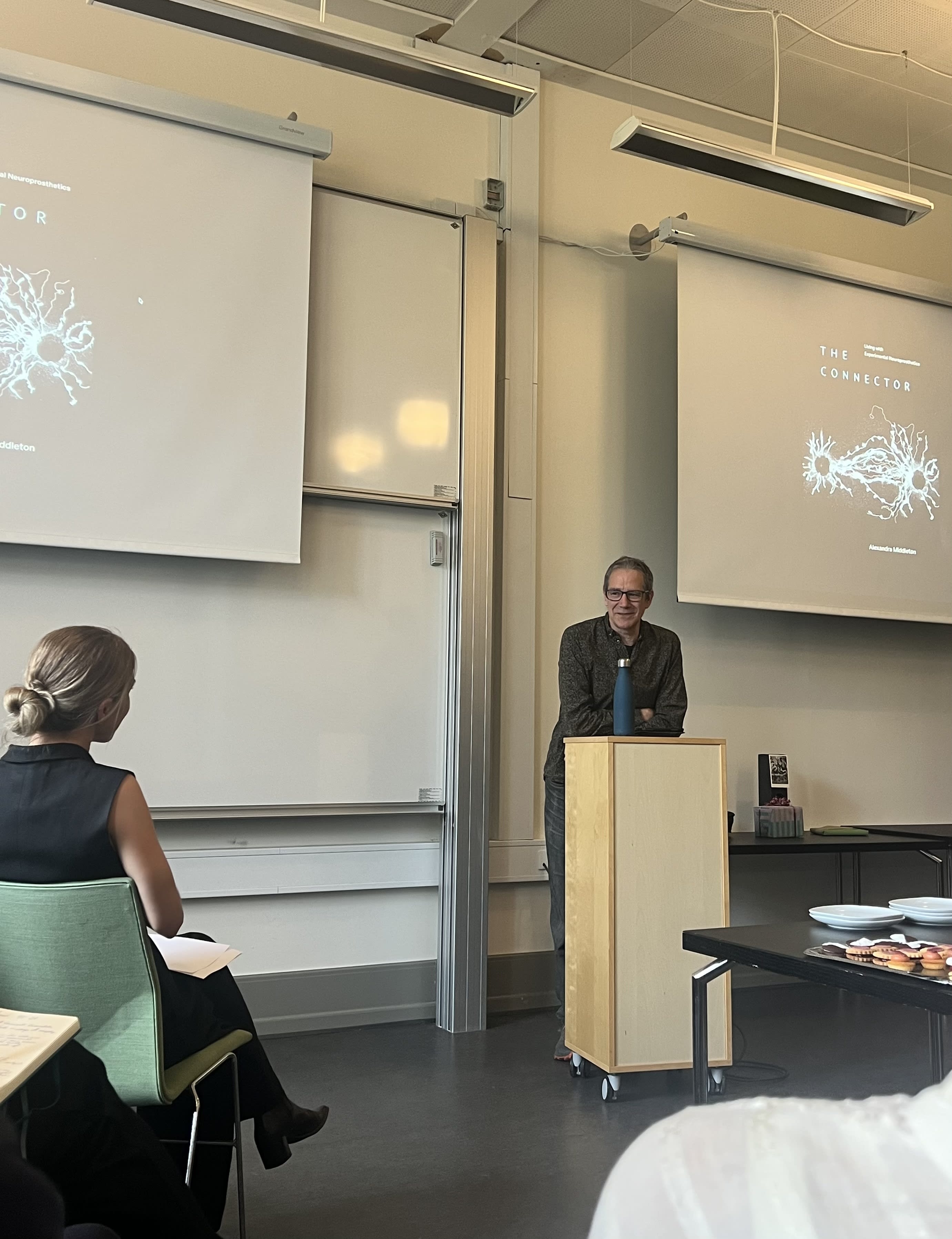
I’ll be on the road for a few more book events this year — a reception at the European Association for the Social Studies of Science and Technology in Kraków in September, and a book launch at the Duke Press stand at the American Anthropological Association Annual Meetings in St. Louis in November, along with visiting classrooms and departments in-person and over Zoom. I’m always eager to connect with readers, so don’t hesitate to reach out if you read and want to discuss.
And if you’d like a copy of your own, those in North America can order from Duke University Press’ website (currently running their Spring Sale of 40% off until May 19!), those outside North America can order from MNG University Presses (use code CON26 for 30% off) or you can find The Connector anywhere else books are sold.
I’m so excited for The Connector to now begin a life of its own with readers who will bring their own interpretations and connections to its pages and stories.
Now, there’s a sense of completion, of cycle-culmination that has moved in. And, with it, a vast open space — one that’s starting to germinate but still feels nascent, fallow. Now the work of time is to be with and trust it.
Congratulations! And beautiful to read about the process
Congratulations! Enjoyed your reflections on the writing experience too. 💜🎉